Source single cab diesel mini truck for logistics, construction, and farming
Compare 30 single cab diesel mini truck models with varying cargo volumes, engine powers, and dimensions. These compact vehicles feature automatic or manual transmissions and are ideal for urban delivery and light hauling tasks.
Key considerations
Products List




Comprehensive Sourcing Guide
Strategic Sourcing Guide for Single Cab Diesel Mini Trucks
Understanding the Technical Landscape of Mini Diesel Utility Vehicles
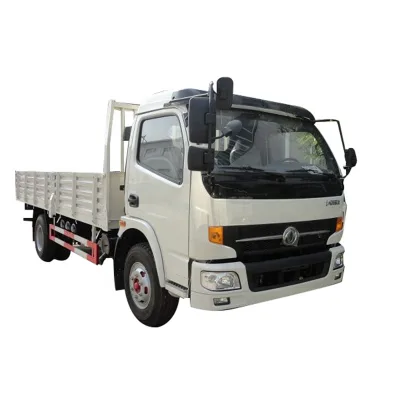
The procurement of single cab diesel mini trucks requires a precise understanding of the specific technical configurations available in the current market. Based on observed product data, these vehicles are characterized by a compact footprint designed for urban logistics and light industrial applications. The core architecture typically features a "Mini" body style with an "Open" body type, often configured as a cargo truck with a dedicated cargo box. The exterior finish is predominantly observed in white, a standard choice for fleet visibility and maintenance.
A critical technical differentiator in this segment is the propulsion system. While the market offers both diesel and gasoline variants, the specific focus on "single cab diesel mini truck" narrows the scope to models utilizing diesel engines. The observed diesel configurations, such as the KYC D5, utilize the D19tcie3 engine model. This engine delivers a maximum power output of 85 Kw, operating within a power range of less than 150 horsepower. This power profile is optimized for fuel efficiency and torque delivery in stop-and-go urban environments rather than high-speed highway travel, with a maximum observed speed of 100 Km/H.
The transmission architecture varies by model, with some configurations featuring automatic gearboxes while others utilize manual transmission systems. The drive configuration is consistently observed as Rear-Wheel Drive (RWD) or a 4x2 layout, which is standard for light cargo duties. The vehicle dimensions are tightly controlled to ensure maneuverability in narrow streets. Observed vehicle sizes range from approximately 5280 mm to 5795 mm in length, with widths between 1780 mm and 1950 mm, and heights around 2090 mm to 2130 mm. The wheelbase, a key factor in stability and cargo capacity, varies between 3000 mm and 3600 mm depending on the specific model variant.
Cargo Capacity and Dimensional Specifications
For buyers evaluating the utility of these vehicles, the cargo box specifications are paramount. The design philosophy centers on maximizing payload within a compact chassis. The cargo box interior dimensions are critical for determining the types of goods that can be transported. Observed interior sizes for diesel mini trucks include configurations such as 3400 mm x 1850 mm x 380 mm and 2850 mm x 1850 mm x 380 mm. Other variants may feature narrower widths, such as 1600 mm or 1680 mm, with lengths varying from 2520 mm to 3600 mm.
The volumetric capacity of these cargo boxes typically ranges from 1.82 cubic meters to 2.39 cubic meters. This capacity is sufficient for palletized goods, construction materials, or urban delivery loads. The payload capacity is defined by the Gross Vehicle Weight (GVW), which is observed in the range of 3000 kg to 4230 kg. The curb weight, representing the empty weight of the vehicle, ranges from approximately 1350 kg to 2080 kg. This results in a payload capacity that generally falls between 1000 kg and 2200 kg, depending on the specific model's GVW and curb weight configuration.
Buyers must carefully match the cargo box volume and dimensions to their specific operational needs. For instance, a model with a 3600 mm interior length and 1750 mm width offers a different loading profile compared to a 2850 mm length variant. The "Open" body style suggests a flatbed or box configuration that may require additional securing mechanisms for specific cargo types. The structural integrity of the cargo box is implied by the standardized interior dimensions, but the exact material specifications should be verified during the supplier evaluation phase.
Compliance, Certification, and Regulatory Standards
Navigating the regulatory landscape is essential for international procurement. The vehicles described are manufactured in China, with specific production origins noted in Hubei province. This geographical origin influences the applicable export standards and the certification requirements for import into various jurisdictions. A key observation in the product data is the mention of "ISOSeats:Steering:Left," which indicates a specific configuration regarding seating and steering position. This is a critical compliance point for markets that mandate left-hand drive (LHD) or right-hand drive (RHD) configurations based on local traffic laws.
Regarding quality management, the product data references "Mgnt Certification: ISO," suggesting that the manufacturing process adheres to ISO management standards. While the specific ISO9001 standard is mentioned in background context, buyers should verify the current validity of any ISO certifications held by the supplier. It is important to treat certification claims as observations of the specific product listing rather than a universal guarantee for all units in the category. Buyers must request current, valid certificates of conformity that align with the destination country's import regulations.
The "Mini Size" standard is noted as a product standard, which may refer to a specific classification within the Chinese automotive industry or a market-specific categorization. However, for international buyers, this classification must be cross-referenced with local vehicle classification laws. For example, a vehicle classified as a "Mini" in one market might be categorized as a light commercial vehicle or a passenger vehicle in another, affecting licensing, insurance, and road tax requirements. The "CBU" (Completely Built Unit) packing method indicates that the vehicles are shipped in their final assembled state, which simplifies the import process but requires careful attention to shipping container utilization and freight costs.
Cost Drivers and Procurement Economics
The pricing structure for single cab diesel mini trucks is influenced by several variables, including engine configuration, cargo box dimensions, and optional features. The observed price range for these vehicles spans from approximately 700 USD to over 30,000 USD. This wide disparity suggests that the lower end of the spectrum may represent base models with minimal specifications or older inventory, while the higher end likely includes fully equipped units with larger cargo boxes, advanced engine options, or specific customization.
The Minimum Order Quantity (MOQ) is another significant economic factor. The observed MOQ range is between 1 and 10 units. This flexibility allows small businesses to purchase a single unit for immediate deployment, while larger fleets can negotiate bulk pricing by ordering in the 10-unit range. Buyers should be aware that the unit price often decreases as the order volume increases, but the exact discount structure is not standardized and must be negotiated directly with the supplier.
Lead times and shipping costs are additional cost drivers that are not explicitly detailed in the product data but are inherent to international trade. Since the vehicles are CBU and originate from China, ocean freight costs, insurance, and customs duties will significantly impact the landed cost. The "New" condition of the vehicles ensures that the purchase price reflects a brand-new asset, but buyers should verify the warranty terms and after-sales support costs, which can vary by supplier. The "Gasoline" variant observed in the data serves as a comparison point; diesel models often command a premium due to the higher cost of the engine and the perceived fuel efficiency for heavy-duty applications.
Typical Applications and Operational Use Cases
The technical specifications of single cab diesel mini trucks point to a diverse range of applications, primarily centered on light commercial logistics. The compact dimensions and maneuverability make these vehicles ideal for urban delivery services, where space is limited and frequent stops are required. The cargo capacity of up to 2.39 cubic meters is well-suited for e-commerce last-mile delivery, furniture transport, and small-scale retail restocking.
In the construction and infrastructure sectors, these trucks are valuable for transporting tools, building materials, and equipment to job sites that may be inaccessible to larger vehicles. The RWD configuration provides adequate traction for light off-road conditions often found in construction zones. The "Open" body style allows for the transport of oversized or irregularly shaped items that do not fit within a fully enclosed box, provided they are secured properly.
The diesel engine's torque characteristics make these vehicles suitable for hilly terrain or routes with frequent acceleration and deceleration. The maximum speed of 100 Km/H is sufficient for inter-city travel on secondary roads, while the fuel efficiency of the diesel engine reduces operational costs over long distances. The "Light Cargo Truck" designation aligns with the vehicle's role in supporting small to medium-sized enterprises that require a reliable, cost-effective transport solution without the overhead of a full-sized truck.
Supplier Evaluation and Quality Assurance Protocols
When evaluating potential suppliers for single cab diesel mini trucks, buyers must adopt a rigorous verification process. The first step is to confirm the authenticity of the product data provided. Buyers should request detailed technical datasheets that match the observed specifications, including engine model numbers (e.g., D19tcie3, Lj481q6), GVW, and curb weight. It is crucial to verify that the specific model being ordered matches the intended application, as variations in wheelbase and cargo box size can significantly impact performance.
Quality control should extend beyond the factory floor. Buyers should inquire about the testing procedures used to validate the vehicle's performance, particularly regarding the engine's power output and the structural integrity of the cargo box. While specific test results are not provided in the source data, buyers should request evidence of road testing and load testing to ensure the vehicle meets the claimed GVW and payload specifications.
The "Mgnt Certification" mentioned in the data should be verified through official channels. Buyers should ask for the certificate number and the issuing body to confirm its validity. Additionally, the origin of the vehicle, specifically the Hubei province location, should be confirmed to ensure that the supplier is the actual manufacturer or an authorized distributor. This verification helps mitigate the risk of purchasing counterfeit or substandard vehicles.
Long-Term Procurement and Lifecycle Management
Sourcing a single cab diesel mini truck is not just a one-time transaction but an investment in long-term operational capability. Buyers should consider the availability of spare parts and the technical support infrastructure provided by the supplier. The specific engine models used, such as the D19tcie3, should be cross-referenced with the availability of compatible parts in the buyer's region. A lack of local parts support can lead to extended downtime and increased maintenance costs.
The "New" condition of the vehicles implies a warranty period, the terms of which should be clearly defined in the procurement contract. Buyers should negotiate warranty coverage that includes the engine, transmission, and cargo box structure. The "CBU" packing method ensures the vehicle arrives in pristine condition, but buyers should also plan for the initial inspection and registration process upon arrival in the destination country.
Finally, buyers should consider the resale value and lifecycle of the vehicle. Diesel mini trucks with a reputation for reliability and fuel efficiency tend to hold their value better in the secondary market. By selecting a model with a proven track record and a robust support network, buyers can ensure a lower total cost of ownership over the vehicle's lifespan. The continuous evaluation of supplier performance and product reliability is essential for maintaining a competitive edge in logistics and transportation operations.
FAQs
What engine models are used in single cab diesel mini trucks?
The single cab diesel mini trucks utilize the D19tcie3 engine model. This engine delivers a maximum power output of 85 Kw and is designed for fuel efficiency in urban environments.
Which cargo box volumes are available for these vehicles?
Available cargo box volumes range from 1.82 to 2.39 cubic meters. Specific configurations include dimensions like 3400x1850x380 mm or 2850x1680x380 mm depending on the model variant.
How is the steering configuration defined for these trucks?
The steering configuration is specified as Left-hand drive. This detail is part of the product certification data and ensures compliance for markets requiring left-hand traffic operations.
What is the maximum speed capability of these diesel trucks?
The maximum speed capability is observed at 100 Km/H. This speed profile is optimized for urban logistics and stop-and-go environments rather than high-speed highway travel.
Can buyers find these trucks with a minimum order quantity of one?
Yes, buyers can find these trucks with a minimum order quantity of one. The observed MOQ range spans from 1 to 10 units, allowing for single-unit purchases.
Which vehicle body styles are offered in this category?
The offered body styles are classified as Mini with an Open body type. These configurations are typically designed as cargo trucks with a dedicated cargo box for light industrial applications.
What is the origin location for these single cab diesel mini trucks?
The origin location is China, specifically produced in Hubei province. This geographical origin influences the applicable export standards and certification requirements for international buyers.